Photo of a bag of Juan Carlos Huanca

Bolivia Juan Carlos Huanca

Gesha

It’s the first time we feature this Bolivian producer, whose dedication to coffee has been tested numerous times by tree diseases. He never gave up, and today, we can celebrate his work with a clean cup that tastes like white blossom, cane sugar, and white peach.

Sorry, sold out!

Variety: Gesha
Process: washed

Flavour: white blossom, cane sugar, white peach

Body:   Acidity:

Roast: Omni (filter + espresso)

Origin story and details

Producer: Juan Carlos Huanca
Farm / Cooperative: Finca La Asunta
Region: La Asunta, Bolivia
Altitude: 1550m above sea level

Very Special

It’s easy to take for granted coffees like these: “It’s just another washed Gesha!”. But let’s take a step back and remember why these lots are something to celebrate—essentially, what the Very Special arm of our online subscription is about.

First, the variety. Growing Gesha is not always straightforward, and producers like Juan take a great risk when investing land and time in harvesting ‘exotic’ varietals for the global specialty market.

Second, the execution. The variety has amazing flavour characteristics, but the fermentation process is a producer’s ‘make it or break it’ moment (much like the roasting for us). In this case, the washed process was followed with precision, respecting and elevating the Gesha’s celebrated properties.

Third, the context. Juan is growing specialty coffee in a land where coca has historically predominated. Despite numerous pushbacks, he’s stuck to coffee, which may be a bit more risky but has a healing power for the local community and lands (he briefly explains why in his own words, just below).

‘Just’ another humble and delicious VS delivery.


Finca La Asunta - Bolivia from Cafe Imports on Vimeo.


Words from Juan himself

“The municipality of La Asunta is located in the central part of the province of Sud Yungas, in the center-east of the department of La Paz. La Asunta presents a very rugged topography, with irregular reliefs of hills with very pronounced slopes. The municipality’s water resources are fed by innumerable waterfalls up to 400 meters high, with large flows, the main rivers being the Boopí and Cotacajes.

The region has a warm climate with an average temperature of 28°C, registering a low in winter of 19 °C and a humidity of 70%, with rainfall in normal years of 1,300 mm.2. La Asunta is located 217 kilometers by road to the northeast of the city of La Paz, capital of the department. Crop production is at the center of a coffee plantation development program to replace surplus coca crops. Coffee, which meets high quality standards, represents a viable agricultural alternative for local communities.

I was born in the Camacho province and I arrived in the Yungas in 1992 with my father who was a coffee grower. In 2004 I was able to buy my own land and planted Creole variety but the disease ruined everything. After that I had to start over and I planted catuaí and Gesha and took care of them a lot, since then I have been in specialty coffees and I can take care of my three children with this.

Most of the coffee in Bolivia comes from Caranavi in ​​the Nor Yungas region. We are in La Asunta, Sud Yungas, which is of a different origin within the same country. This region is characterized by producing the Coca leaf, although in recent years this production overflowed, almost irreversibly affecting the fertility of the region. By planting coffee as an alternative product, we reduce coca production and recover biodiversity since coffee needs shade. In addition, unlike coca, we seek to have natural fertilizers so that our soils are fertile for many more years.

To all those who are drinking this coffee, I hope you enjoy it a lot. After a fall, the most important thing is to get up and continue with more strength, learning from the mistakes that are made. I lost almost all of the first plantation I had because it got sick and I didn’t know how to control the pests. I felt devastated since I had spent a lot of money and also had my small children.

Despite the difficulties we went through and thanks to the support, not only physical but also moral, that my wife gave me, we managed as a family and tried again to plant coffee. Now, we are taking the risk of producing exotic varieties, and we are doing much better than we were before. It is never too late for a new beginning.”


Juan’s farm

Juan Carlos Huanca owns Finca La Asunta in La Asunta Munacipality, North-West of Bolivia. This 7-hectare farm has 3 hectares planted with coffee and he grows citrus fruits on the other parts of the farm.

Juan planted Gesha in the hopes of producing new and exciting profiles in the region. They produce only 2250kgs of coffee annually from the farm.


This lot’s process

Processing in Bolivia is very similar in practice to Colombia’s specialty producers, as many Bolivian smallholders invest in processing infrastructure. In washing, the coffee is sorted, depulped, fermented, and dried for about two weeks at the farm level.

Juan does a dry fermentation for 22 hours then dries on raised beds for 7 days.
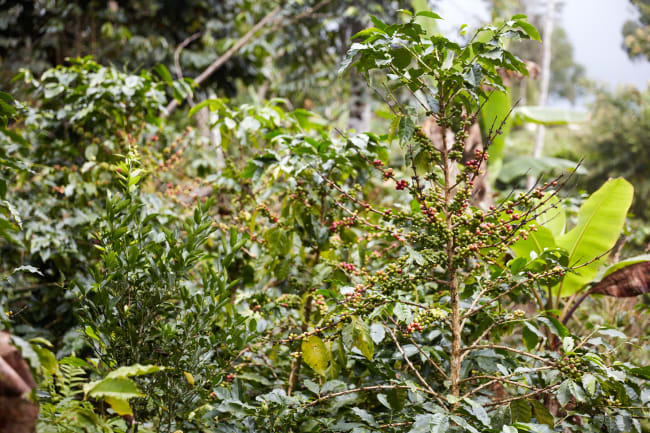

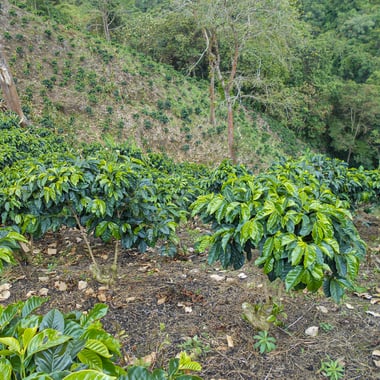
Coffee trees on Finca La Asunta.

Coffee trees in Bolivia

Traceability

100% Gesha coffee beans, provided by Cafe Imports and roasted by us on Gadigal land / Sydney.

Country grade: Unknown ?


This page has all the sourcing information (variety, process, region, story, importer, harvest date, and more) that our importers share with us for public use.

Being transparent helps us to talk confidently about the quality and background of the products we sell. It also helps you to know exactly what you’re buying.

Learn more:
Coffee page transparency legend
Our coffee philosophy
Our business approach

Fresh harvest sourcing

This coffee was harvested in October 2023.

We only source and roast coffee from each country’s latest harvest season (so the green coffee is never older than 1 year from the time of picking, processing and packing).

This ensures the sensory qualities are always at their peak and unaffected by excessive ageing.

Learn everything about this coffee:


Roasted for espresso and filter (best enjoyed black)

Roast style: omni. Omni roasts are designed to brew and taste great both as espresso and filter. Our omni single origins generally sit on Agtron values in the ~70-60 value range. So, technically, they are somewhere in the lighter side of the medium spectrum.

Designed for espresso and filter brewing. Best enjoyed black.


Learn more:
Our Loring Kestrel S35 roaster
Our roasting style and approach

Try our custom brewing recipes

Our recipes and ratios are tailored to our coffee sourcing and roasting styles, bringing the best flavour and feel out of each coffee.

For pour over, immersion, and other filter brewing styles, check all our brew guides.

For our espresso single origins, we recommend a coffee:yield ratio of 1:3:

  • Dose: 20g ground coffee
  • Yield: 60g espresso
  • Total brew time: ~24-28 seconds

This is just a starting point! We encourage you to experiment, taste, and adjust to find the recipe that you enjoy the most.


Learn more:
Our espresso brew guide (single origin)
Brewing ratio calculator

Packaging and materials

  • Bags: ABA-certified home compostable (AS 5810-2010)
  • Labels: recyclable
  • Valves (only on +250g bags): general waste
  • Box and tape (online orders): recyclable

Learn more:
Our packaging

Brewing coffee at home

Best brewed 15–49 days post-roast

When you leave your whole beans to rest (inside the sealed bag) until our recommended window, you’re brewing at optimum flavour and acidity.

This time allows for the gas compounds, absorbed during the roasting process, to leave the coffee. If you brew too early, it may not be bad, but you’ll miss out on each coffee’s best flavour.

Our recommended brewing window

FAQs

Do you ship anywhere in Australia?

Yes! We deliver our coffee and brewing gear Australia-wide, roasted to order and in compostable and recyclable packaging.

Do you ship internationally?

We ship coffee beans to select international countries. Check the list to see if we ship to your destination.

Can I buy pre-ground coffee?

Yes, we offer pre-ground options for different methods:


- Ground for domestic espresso (home espresso machine)
- Ground for stovetop (Bialetti)
- Ground for AeroPress / Kalita / Cold Brew / Moccamaster / Plunger / French Press (immersion style)
- Ground for V60/Chemex (pour over style)

Do you source your coffee ethically? How so?

We source our coffee from small growers, producers, and cooperatives through responsible importing companies; 95% of our green coffee beans are supplied by Caravela Coffee, Cafe Imports, Osito, and Melbourne Coffee Merchants (certified B Corporations), plus Condesa Co Lab, Cofinet, and a few more.

We share all the traceability information we have about each coffee lot (territory of origin, producer, variety, processing method, importer, quality grade) on each dedicated coffee page. This applies to the blend components in our espresso blends.

Learn more about our coffee philosophy.

Do you roast dark or light?

We roast our single origins using omni roast medium/light profiles. (Omni means you can use the coffee both for filter and espresso brewing, no need to buy different bean bags with specific roast styles.)

We roast our espresso blends using darker profiles.

Learn more about our approach to roasting.

What is ‘specialty coffee’?

The definitions and references to specialty coffee are tricky, if not controversial.

Historically, and as most people see it these days, specialty coffee is Arabica beans that score over 80 in the old Specialty Coffee Association point scale. Today, the SCA refers to specialty coffee as “a coffee or coffee experience that is recognised for its distinctive attributes, resulting in a higher value within the marketplace.”

Our single origins are Arabica +85 SCA score and our blend components Arabica +80, which could be considered ‘true specialty’ coffee. Though we prefer to use the term ‘high quality’ and back this claim with solid traceability data.

What’s the benefit of your coffee subscription?

When you subscribe, you get freshly roasted coffee delivered as often as you need, so you don’t have to be so hands-on in planning your coffee purchases.

Also, you get free shipping on every delivery, and you can cancel or pause whenever you need – no lock-in periods.

Can I buy these beans in your coffee shops?

Yes, definitely! You can walk into any of our cafes in Sydney (or our wholesale network) and grab what’s available on the shelves. You can also buy online here and select free pickup from the Sample Coffee stores.


See all our FAQs

Sample Coffee Roasters warehouse in St Peters, Sydney

With love, from Sample

We’re an independent coffee roasting company based in Gadigal land / Sydney, Australia

We’ve been sharing exceptional coffees since 2011, with a particular focus on rotating single origins, ethical sourcing, and homebrewing accessibility.

Our daily work is driven by quality, consistency, transparency, and fun. This approach has slowly and organically connected us with a community of homebrewers and professionals who value how we do business and, above all, love delicious coffee beyond the hype.

Learn about us

Current coffees

All our current coffees