We are one of the few Australian roasters getting involved with this project. We’ll be roasting all samples with our Loring Kestrel S35, using an omni profile that we’ve specifically designed for each process variation.
→ Learn more about this project on our journal, the Decaf Project site and James Hoffmann’s YouTube channel.
About the decaf processes
1. Ethyl Acetate (EA) Decaffeination Process (by Coffein Compagnie)
Ethyl acetate is used in decaffeination because it is highly selective with respect to caffeine and can physically extract it from green coffee beans in a gentle, but targeted manner.
First, the green coffee beans are steamed to remove the silverskin and increase their water content, opening up their cell structure. The water-ethyl acetate-solution selectively extracts caffeine from the beans in several stages. Finally, steam is used to remove any remaining ethyl acetate from the beans, which are then dried to their original moisture content.
Ethyl Acetate is a natural component of sugar cane, coffee, and fruits such as musk, strawberries and bananas, but is also produced synthetically.
2. Natural Carbonic™ (previously referred to as CO2 Subcritical) Decaffeination Process (by CR3-Kaffeeveredelung M. Hermsen)
This unique process was developed by CR3 in the late 80s. It uses natural carbon dioxide, under subcritical conditions (i. e. relatively low temperature and pressure), to gently and selectively target caffeine, so as to retain the full taste potential of the green coffee. This process is all organic certified.
Raw, unroasted coffee is moistened and placed in a vessel with pressurized liquid carbon dioxide, which circulates through the coffee to extract caffeine. Once the desired caffeine level is achieved, the CO2 circulation stops, and the coffee is gently dried to its original moisture content. The caffeine is extracted from the liquid carbon dioxide, allowing both components to be reused.
3. Swiss Water® Decaffeination Process
The Swiss Water® Process uses water, temperature, and time to gently remove caffeine, while preserving all the coffee’s original characteristics.
The green coffee, rehydrated to the target moisture level for decaffeination, is put into contact with a Green Coffee Extract (GCE). GCE is made out of fresh water and all of the soluble solids within coffee (minus the caffeine). The GCE is continuously circulated around the green coffee, triggering the diffusion process, which removes only the caffeine (the only element of imbalance) and none of the flavor components of the coffee. The process takes place over 8-10 hours until there’s no more than 0.1% of caffeine remaining. Caffeine is then removed from the GCE using a proprietary carbon filtration system, so that the GCE can be reused.
About La Virgen and its connection with Caravela (the coffee importers)
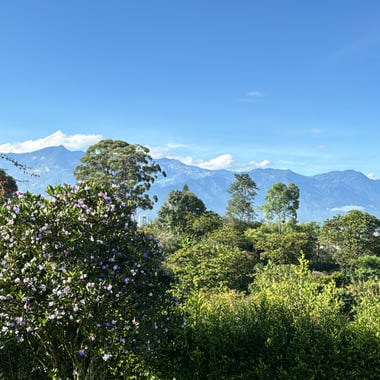
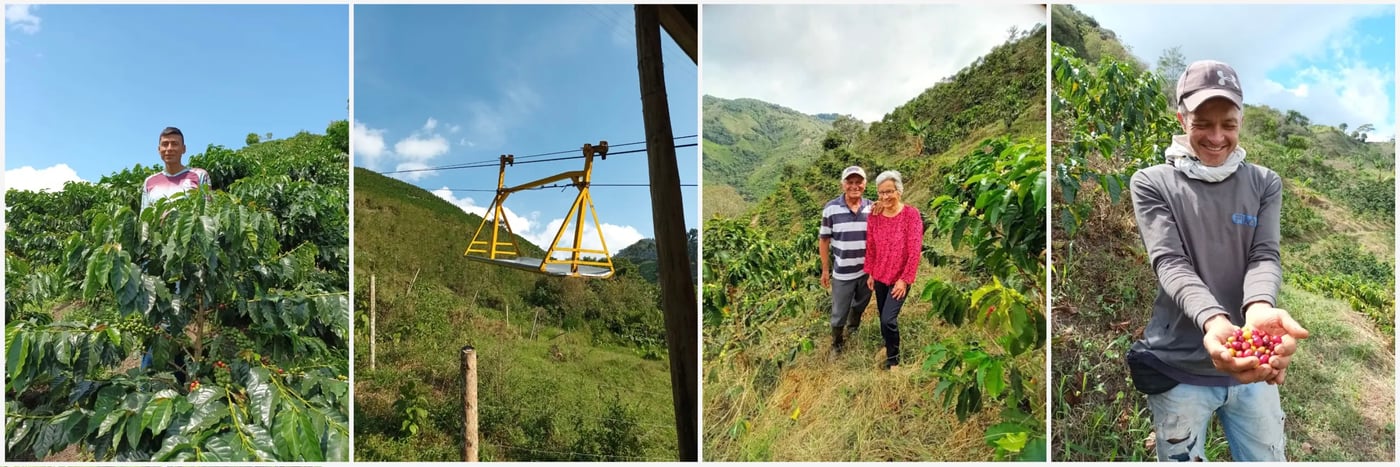
Guadalupe is a small, picturesque municipality in Huila, nestled along the skirts of the Eastern Cordillera of Colombia. Since its founding, Guadalupe has been deeply shaped by Catholic tradition, with priests and devoted individuals playing a key role in its history. On December 12, 1715, Francisca Salazar, the daughter of a wealthy Spanish landowner, Francisco de Salazar, donated three hectares of her family’s hacienda to establish a town in honor of the Virgin of Guadalupe, whom she worshipped. This land became home to an important church, surrounded by houses that soon formed the town of La Viciosa.
In 1827, tragedy struck when a massive earthquake destroyed the town. However, with the same resilience that defines its people today, the town was rebuilt a year later and renamed “Guadalupe.”
Guadalupe is blessed with an abundance of water sources, including the Suaza River, which nourishes the fertile lands and sustains both the community and its agricultural bounty. The region’s water supply, combined with fresh, cool weather, creates ideal conditions for growing high-quality crops. Today, the hardworking people of Guadalupe make their living through cattle farming, river fishing, and cultivating crops like corn, beans, citrus fruits, and, most notably, coffee – one of the area’s most valuable resources.
Coffee is grown in the remote highlands surrounding the town, at ideal elevations between 1,400 and 2,000 meters above sea level. These high-altitude farms benefit from nutrient-rich soils, cool breezes, and abundant rainfall, all of which contribute to exceptional coffee production.
In 2013, Caravela began working with the coffee growers of Guadalupe. At that time, producers traveled to our purchasing station in Pitalito to deliver their coffee. Recognizing the potential of this coffee-growing region and its remote location, Caravela established a purchasing station in Guadalupe to be closer to these dedicated farmers.
At the heart of this station is a commitment to quality. A skilled quality analyst carefully evaluates each lot of coffee, while a PECA technician works directly with farmers to improve both quality and sustainability. Today, this station primarily receives coffee from the highlands of Guadalupe and neighboring Suaza, supporting a community of growers who are deeply committed to producing exceptional coffee that embodies the rich traditions and abundant natural resources of their homeland.
The producers
Coffee growers in Guadalupe are very traditional coffee growers. They work with their families and their communities to grow and produce coffee how they’ve learned through their lives from their parents and grandparents. Additionally, coffee growers in this region are very committed to the environment, some of them having achieved the Rainforest Certification. Each farm has their own wet mill and drying infrastructure or at least one per family in which they all share their spaces. They own farms with average of 5 hectares. In the last few years, we’ve noticed an interest in improving their quality, changing some varieties and processes with the objective of achieving better quality for their coffee.
In Guadalupe, we work with many aging producers. However, many of the sons and daughters of these producers are stepping up to support and continue with the family traditions with greater energy, innovation and care for the environment.
The washed fermentation process
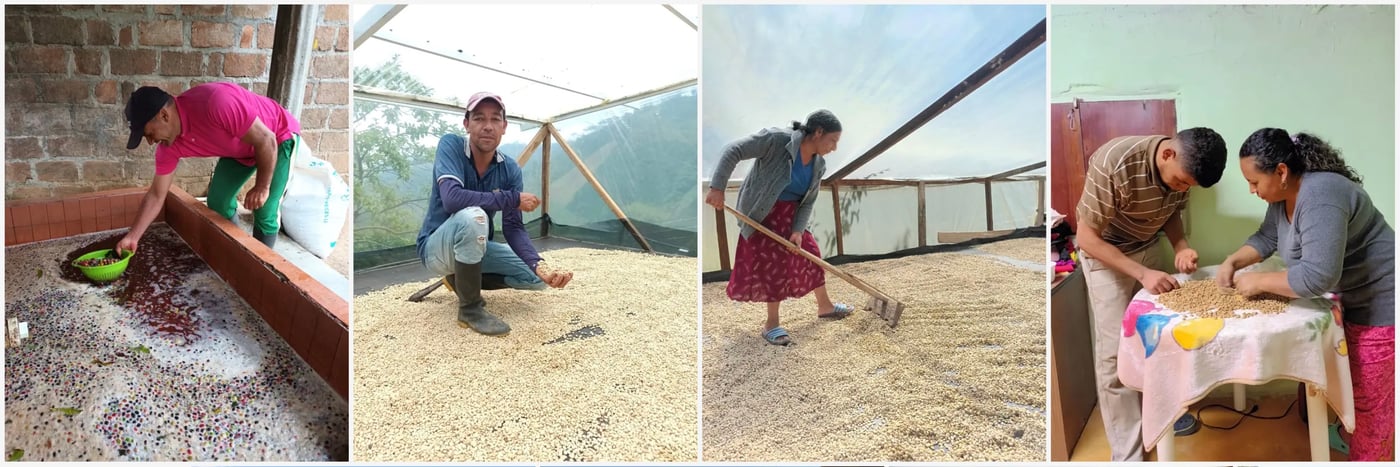
Coffee producers with whom we work in Guadalupe start their process with a manual and selective harvesting process. During the pickings, they try to get only the ripe cherries, or there are some that carry out a handsorting before de-pulping. After de-pulping, they do a fermentation of 16-36 hours, and then 2 or 3 washes. In some cases, we do see coffee growers doing cherry resting for between 18 and 36 hours in plastic bags or silos before de-pulping. The coffee is then dried under shade in covered facilities. Their drying process may vary depending on the farm characteristics and the weather conditions, but in average, drying in these farms take between 15 and 25 days. Then, they take their coffee to the purchasing station in the town to be analyzed by the Quality Analyst. Here it goes through a rigorous physical analysis first to measure moisture level, water activity and yield factor. After, it undergoes through the sensory analysis which will finally determine the quality grade of the coffee. Then, the coffee grower will bring the coffee to the warehouse to sell it depending on the feedback of the physical and sensory analysis. From the warehouse, the parchment coffee is sent to Caravela’s Dry Mill in Armenia where it is processed and sent to port.