Photo of a bag of La Bugambilia

Guatemala La Bugambilia

This Pacamara micro-lot is from a plot of land called La Bugambilia, one of five parcels of land on El Guatalón estate. The farm is located in the up-and-coming coffee region of Santa Rosa, Guatemala. La Bugambilia and El Guatalón are owned and managed by third-generation farmer Guillermo Juarez and his son Willy. The La Bugambillia plot is 40-hectares in size – 18 of which are dedicated to coffee, with the remainder reserved for native forest. It sits at an elevation of 1,450 – 1,850m above sea level and is named after the Bougainvillea plant which is very common in Guatemala and has vibrant pink and purple flowers. Pacas, Caturra, Pacamara, Bourbon Amarillo and Geisha are all grown on this estate. This lot is 100% Pacamara – a variety that thrives on this plot and often places in the Cup of Excellence competition.

Sorry, sold out!

Variety: Pacamara
Process: washed

Flavour: Valencia orange, yellow peach, boysenberry

Body:   Acidity:

Roast: Omni (filter + espresso)

Origin story and details

Producer: Guillermo Juárez
Region: Santa Rosa, Guatemala
Altitude: 1,450 - 1,850m above sea level

Our latest VS feature is a microlot of 100% Pacamara, a varietal that usually takes the top positions at the Cup of Excellence competitions. It’s not a coincidence that this is the goal of its producers, Guillermo and Willy.


VERY SPECIAL

This is the first time we’re featuring the Guatemalan origin and the Pacamara varietal on Brew Crew VS, and once you brew it, you’ll know why. Its clean, tropical, and floral qualities come from the combination of this varietal’s genetics plus the passion and professionalism of a coffee-producing family with more than a century’s worth of knowledge.

We’re lucky to share a part of a tiny microlot bought entirely by Melbourne Coffee Merchants—an Australian green coffee importer that joined us in becoming B Corporation certified. Congrats!


LA FAMILIA

The estate was first established in 1910 by Daniel Juarez, who planted it with Typica and Mundo Novo varieties, and was the first commercial coffee plantation in the region. Daniel’s son, Juan Alberto, took over the farm in the 1970s, focusing on growing the estate’s commercial operations and expanding its land. In 2010, Juan Alberto handed the business to his son Guillermo; today, he looks after the agronomy together with his own son, Willy (the 4rth generation!), who manages de process operations at the wet and dry mills.

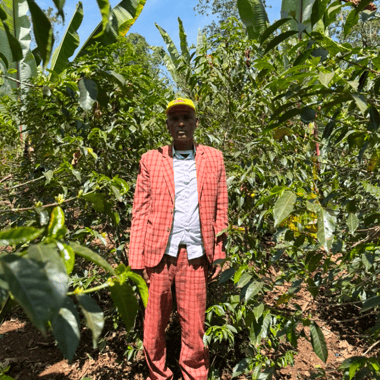
Guillermo (pictured right) worked as an agronomist for many years, and today works on the farm with his son, Willy (pictured left).


LA BUGAMBILIA AND EL GUATALÓN ESTATE

El Guatalón estate is divided by altitude and soil type into 5 parcels of land: La Bugambilia, El Cuje, Los Pajuiles, and Guatalón (all these in the municipality of Santa Rosa de Lima) and La Loma (located in the neighbouring Mataquescuintla). Each generation has introduced new varieties, including Typica, Mundo Novo, Pache, San Ramon, Caturra, Catuaí and most recently Villa Sarchi, Pacamara and Maragogype. These varieties flourish in different microclimates, which they are lucky to access thanks to the varied characteristics of every parcel.

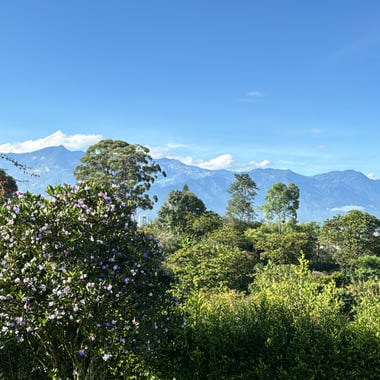
Santa Rosa’s unique topography, with a range of microclimates, offers great potential for specialty coffee production


La Bugambillia is a 40-hectare plot that sits at an elevation of 1,450-1,850m above sea level. It is named after the Bougainvillea plant, which is very common in Guatemala and has vibrant pink and purple flowers.

Only 18 hectares grow coffee trees, specifically the Pacas, Caturra, Bourbon Amarillo, Geisha and Pacamara varietals. Native trees like oak, cedar, Garvilea and Cuje—generally taller and with a larger canopy—occupy the rest of the land, protecting the coffee trees from direct sunlight and harsh winds and contributing to preserving the local flora and fauna. (This is what we know as shade-grown coffee.)

The shade at work at Guatalón state


PACAMARA = EXCELLENT

This lot is 100% Pacamara, a variety that thrives on the La Bugambillia plot and produces extremely high-quality cupping coffees. Originating from a cross between Pacas and Maragogipe, it is grown primarily in El Salvador, where it frequently dominates the Cup of Excellence—a competition the producer knows well.

When Guillermo took over the estate, he shifted toward specialty coffee production (more premiums, financial sustainability, better living). At some point, he heard about the Cup of Excellence and decided to participate. In 2012 they came very close to qualifying (finishing 24th and just outside the final lineup of 23 farms), and only a couple of years later, in 2014, they were thrilled to receive their first accolade. Since then, the farm has been awarded nearly every year, most recently in 2022, when two lots placed 17th and 11th.

The awards and recognition are very motivating for Guillermo, who loves a challenge: “We want to go further. We know we can deliver higher quality. After all, we know living and succeeding is just about that: always make an extra effort.”


MIGHTY WASHED PROCESS

Harvest begins in December and concludes in March.

The handpicked and ripe beans are processed at the family’s wet mill in Samororo (located close to the La Loma plot). After being depulped, they ferment for 24-40 hours and then washed to remove any remaining pulp. The last stage is to dry on patios, where the beans are turned regularly to ensure they dry slowly and evenly. Once dry, the coffee is rested in the parchment until it is ready for export.

Checking the quality from step 1: cherrypicking


The drying patios at Samororo


BREW, SHARE AND ENJOY

Try the team’s recipe (see below) or find your best method (and let us know how it went!). If you have any questions or need other tips to get started, please say reach out anytime at [email protected] or via @samplecoffee.


All images and information about this coffee and producers have been kindly shared by its importer, Melbourne Coffee Merchants, and edited by us, Sample Coffee (unless linked to or credited otherwise). Learn more here.

Traceability

100% Pacamara coffee beans, roasted by us on Gadigal land / Sydney.

Country grade: Unknown ?


This page has all the sourcing information (variety, process, region, story, importer, harvest date, and more) that our importers share with us for public use.

Being transparent helps us to talk confidently about the quality and background of the products we sell. It also helps you to know exactly what you’re buying.

Learn more:
Coffee page transparency legend
Our coffee philosophy
Our business approach

Fresh harvest sourcing

We only source and roast coffee from each country’s latest harvest season (so the green coffee is never older than 1 year from the time of picking, processing and packing).

This ensures the sensory qualities are always at their peak and unaffected by excessive ageing.

Learn everything about this coffee:


Roasted for espresso and filter (best enjoyed black)

Roast style: omni. Omni roasts are designed to brew and taste great both as espresso and filter. Our omni single origins generally sit on Agtron values in the ~70-60 value range. So, technically, they are somewhere in the lighter side of the medium spectrum.

Designed for espresso and filter brewing. Best enjoyed black.


Learn more:
Our Loring Kestrel S35 roaster
Our roasting style and approach

Try our custom brewing recipes

Our recipes and ratios are tailored to our coffee sourcing and roasting styles, bringing the best flavour and feel out of each coffee.

For pour over, immersion, and other filter brewing styles, check all our brew guides.

For our espresso single origins, we recommend a coffee:yield ratio of 1:3:

  • Dose: 20g ground coffee
  • Yield: 60g espresso
  • Total brew time: ~24-28 seconds

This is just a starting point! We encourage you to experiment, taste, and adjust to find the recipe that you enjoy the most.


Learn more:
Our espresso brew guide (single origin)
Brewing ratio calculator

Packaging and materials

  • Bags: ABA-certified home compostable (AS 5810-2010)
  • Labels: recyclable
  • Valves (only on +250g bags): general waste
  • Box and tape (online orders): recyclable

Learn more:
Our packaging

Brewing coffee at home

Best brewed 15–49 days post-roast

When you leave your whole beans to rest (inside the sealed bag) until our recommended window, you’re brewing at optimum flavour and acidity.

This time allows for the gas compounds, absorbed during the roasting process, to leave the coffee. If you brew too early, it may not be bad, but you’ll miss out on each coffee’s best flavour.

Our recommended brewing window

FAQs

Do you ship anywhere in Australia?

Yes! We deliver our coffee and brewing gear Australia-wide, roasted to order and in compostable and recyclable packaging.

Do you ship internationally?

We ship coffee beans to select international countries. Check the list to see if we ship to your destination.

Can I buy pre-ground coffee?

Yes, we offer pre-ground options for different methods:


- Ground for domestic espresso (home espresso machine)
- Ground for stovetop (Bialetti)
- Ground for AeroPress / Kalita / Cold Brew / Moccamaster / Plunger / French Press (immersion style)
- Ground for V60/Chemex (pour over style)

Do you source your coffee ethically? How so?

We source our coffee from small growers, producers, and cooperatives through responsible importing companies; 95% of our green coffee beans are supplied by Caravela Coffee, Cafe Imports, Osito, and Melbourne Coffee Merchants (certified B Corporations), plus Condesa Co Lab, Cofinet, and a few more.

We share all the traceability information we have about each coffee lot (territory of origin, producer, variety, processing method, importer, quality grade) on each dedicated coffee page. This applies to the blend components in our espresso blends.

Learn more about our coffee philosophy.

Do you roast dark or light?

We roast our single origins using omni roast medium/light profiles. (Omni means you can use the coffee both for filter and espresso brewing, no need to buy different bean bags with specific roast styles.)

We roast our espresso blends using darker profiles.

Learn more about our approach to roasting.

What is ‘specialty coffee’?

The definitions and references to specialty coffee are tricky, if not controversial.

Historically, and as most people see it these days, specialty coffee is Arabica beans that score over 80 in the old Specialty Coffee Association point scale. Today, the SCA refers to specialty coffee as “a coffee or coffee experience that is recognised for its distinctive attributes, resulting in a higher value within the marketplace.”

Our single origins are Arabica +85 SCA score and our blend components Arabica +80, which could be considered ‘true specialty’ coffee. Though we prefer to use the term ‘high quality’ and back this claim with solid traceability data.

What’s the benefit of your coffee subscription?

When you subscribe, you get freshly roasted coffee delivered as often as you need, so you don’t have to be so hands-on in planning your coffee purchases.

Also, you get free shipping on every delivery, and you can cancel or pause whenever you need – no lock-in periods.

Can I buy these beans in your coffee shops?

Yes, definitely! You can walk into any of our cafes in Sydney (or our wholesale network) and grab what’s available on the shelves. You can also buy online here and select free pickup from the Sample Coffee stores.


See all our FAQs

Sample Coffee Roasters warehouse in St Peters, Sydney

With love, from Sample

We’re an independent coffee roasting company based in Gadigal land / Sydney, Australia

We’ve been sharing exceptional coffees since 2011, with a particular focus on rotating single origins, ethical sourcing, and homebrewing accessibility.

Our daily work is driven by quality, consistency, transparency, and fun. This approach has slowly and organically connected us with a community of homebrewers and professionals who value how we do business and, above all, love delicious coffee beyond the hype.

Learn about us

Current coffees

All our current coffees