Photo of a bag of Kiamabara

Kenya Kiamabara

Sorry, sold out!

Varieties: SL28, SL34, Ruiru 11, and Batian
Process: washed

Flavour: plum skin, prune, blackcurrant

Body:   Acidity:

Roast: Omni (filter + espresso)

Origin story and details

Producer: Mugaga Farmers Cooperative Society
Region: Nyeri, Kenya
Altitude: 1700m above sea level

We’re pleased to return to one of our favourite Kenyan origins from the first year of Brew Crew to share their latest harvest.

This is also the first of the fresh harvests from Kenya that we’re sharing, after the crops arrived at our roastery in Sydney in the first few days of June. Harvested and processed in Nyeri County, Kenya, at the very end of 2015, they then made their slow journey through Nairobi to port, and then on to Australia via Melbourne before arriving here in St Peters.

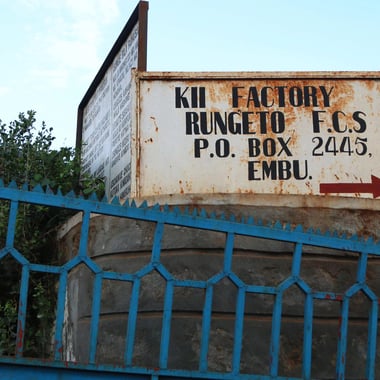
Kiamabara Coffee Factory

Kiamabara Coffee Factory is located in Nyeri County near Karatina Town, and together with Gatina it makes up the Mugaga Farmer Cooperative Society (FCS).

The factory was built was in the early 1980s to process coffee cherry from the neighboring farms, and draws from the nearby Kingu river for its water supply.

The factory receives assistance from the organisation Coffee Management Services, whose long-term goal is increasing coffee production through farmer training, input access, Good Agricultural Practice seminars, and a sustainable farming handbook updated and distributed annually.

They share our desire to establish transparent, trust based relationships with farmers, helping to support a sustainable industry in Kenya and rewarding high quality coffee with premium prices for farmers.

Farmers have access to pre-financing for their crops are given advances for school fees and farm inputs. The factory manager’s training is updated every year by Coffee Management Services, together with field days held by the minister of agriculture and agrochemical companies that deliver inputs to the farmers.

Demonstration plots of coffee are planted at the factory to demonstrate and reinforce the best practices shared with farmers throughout the year.

The harvest

After picking, ripe cherry is brought to the factory before it undergoes processing to remove the skin and pulp – known as the wet processing method. Wastewater is discarded in soaking pits, and is also recirculated for conservation.

The factory uses a disc pulper with three sets of discs to remove the skin and fruit from the inner parchment layer that is protecting the green coffee bean.

After pulping, the coffee is fermented overnight to break down the sugars. It’s then cleaned, soaked and spread out on the raised drying tables. Time on the drying tables depends on climate, ambient temperature and volumes under processing, and can take from 7–15 days in total.

From farmer to coop to factory

Kenya’s coffee crops come from smallholder coffee farms, large estates and small estates. There are over 700,000 smallholders who make up about 55% of the Kenya’s production.

Smallholders are organized in to cooperative societies, which act as umbrella organisations for the factories (also known as wetmills) where these producers deliver their coffee crops for processing.

There can be several factories in an area which farmers are free to choose to deliver their cherry. Due to the traditional auction system in Kenya, quality is rewarded with higher prices. Better factories attract more farmers by producing coffee that fetches the highest prices, in turn giving higher returns to the farmers.


The beautiful photo of Mt Kenya that accompanies this coffee is from Picha Zangu (Jared G Maina Photography) used with permission. There’s lots more photos on his website.

Traceability

100% SL28, SL34, Ruiru 11, and Batian coffee beans, provided by Silo and roasted by us on Gadigal land / Sydney.

Country grade: Unknown ?


This page has all the sourcing information (variety, process, region, story, importer, harvest date, and more) that our importers share with us for public use.

Being transparent helps us to talk confidently about the quality and background of the products we sell. It also helps you to know exactly what you’re buying.

Learn more:
Coffee page transparency legend
Our coffee philosophy
Our business approach

Fresh harvest sourcing

This coffee was harvested in December 2015.

We only source and roast coffee from each country’s latest harvest season (so the green coffee is never older than 1 year from the time of picking, processing and packing).

This ensures the sensory qualities are always at their peak and unaffected by excessive ageing.

Learn everything about this coffee:


Roasted for espresso and filter (best enjoyed black)

Roast style: omni. Omni roasts are designed to brew and taste great both as espresso and filter. Our omni single origins generally sit on Agtron values in the ~70-60 value range. So, technically, they are somewhere in the lighter side of the medium spectrum.

Designed for espresso and filter brewing. Best enjoyed black.


Learn more:
Our Loring Kestrel S35 roaster
Our roasting style and approach

Try our custom brewing recipes

Our recipes and ratios are tailored to our coffee sourcing and roasting styles, bringing the best flavour and feel out of each coffee.

For pour over, immersion, and other filter brewing styles, check all our brew guides.

For our espresso single origins, we recommend a coffee:yield ratio of 1:3:

  • Dose: 20g ground coffee
  • Yield: 60g espresso
  • Total brew time: ~24-28 seconds

This is just a starting point! We encourage you to experiment, taste, and adjust to find the recipe that you enjoy the most.


Learn more:
Our espresso brew guide (single origin)
Brewing ratio calculator

Packaging and materials

  • Bags: ABA-certified home compostable (AS 5810-2010)
  • Labels: recyclable
  • Valves (only on +250g bags): general waste
  • Box and tape (online orders): recyclable

Learn more:
Our packaging

Brewing coffee at home

Best brewed 15–49 days post-roast

When you leave your whole beans to rest (inside the sealed bag) until our recommended window, you’re brewing at optimum flavour and acidity.

This time allows for the gas compounds, absorbed during the roasting process, to leave the coffee. If you brew too early, it may not be bad, but you’ll miss out on each coffee’s best flavour.

Our recommended brewing window

FAQs

Do you ship anywhere in Australia?

Yes! We deliver our coffee and brewing gear Australia-wide, roasted to order and in compostable and recyclable packaging.

Do you ship internationally?

We ship coffee beans to select international countries. Check the list to see if we ship to your destination.

Can I buy pre-ground coffee?

Yes, we offer pre-ground options for different methods:


- Ground for domestic espresso (home espresso machine)
- Ground for stovetop (Bialetti)
- Ground for AeroPress / Kalita / Cold Brew / Moccamaster / Plunger / French Press (immersion style)
- Ground for V60/Chemex (pour over style)

Do you source your coffee ethically? How so?

We source our coffee from small growers, producers, and cooperatives through responsible importing companies; 95% of our green coffee beans are supplied by Caravela Coffee, Cafe Imports, Osito, and Melbourne Coffee Merchants (certified B Corporations), plus Condesa Co Lab, Cofinet, and a few more.

We share all the traceability information we have about each coffee lot (territory of origin, producer, variety, processing method, importer, quality grade) on each dedicated coffee page. This applies to the blend components in our espresso blends.

Learn more about our coffee philosophy.

Do you roast dark or light?

We roast our single origins using omni roast medium/light profiles. (Omni means you can use the coffee both for filter and espresso brewing, no need to buy different bean bags with specific roast styles.)

We roast our espresso blends using darker profiles.

Learn more about our approach to roasting.

What is ‘specialty coffee’?

The definitions and references to specialty coffee are tricky, if not controversial.

Historically, and as most people see it these days, specialty coffee is Arabica beans that score over 80 in the old Specialty Coffee Association point scale. Today, the SCA refers to specialty coffee as “a coffee or coffee experience that is recognised for its distinctive attributes, resulting in a higher value within the marketplace.”

Our single origins are Arabica +85 SCA score and our blend components Arabica +80, which could be considered ‘true specialty’ coffee. Though we prefer to use the term ‘high quality’ and back this claim with solid traceability data.

What’s the benefit of your coffee subscription?

When you subscribe, you get freshly roasted coffee delivered as often as you need, so you don’t have to be so hands-on in planning your coffee purchases.

Also, you get free shipping on every delivery, and you can cancel or pause whenever you need – no lock-in periods.

Can I buy these beans in your coffee shops?

Yes, definitely! You can walk into any of our cafes in Sydney (or our wholesale network) and grab what’s available on the shelves. You can also buy online here and select free pickup from the Sample Coffee stores.


See all our FAQs

Sample Coffee Roasters warehouse in St Peters, Sydney

With love, from Sample

We’re an independent coffee roasting company based in Gadigal land / Sydney, Australia

We’ve been sharing exceptional coffees since 2011, with a particular focus on rotating single origins, ethical sourcing, and homebrewing accessibility.

Our daily work is driven by quality, consistency, transparency, and fun. This approach has slowly and organically connected us with a community of homebrewers and professionals who value how we do business and, above all, love delicious coffee beyond the hype.

Learn about us

Current coffees

All our current coffees