Photo of a bag of Kainamui Photo of a bag of Kainamui

Kenya Kainamui

This coffee originates from the Kirinyaga region, one of Kenya’s best areas for growing and producing a specialty product. Kainamui’s classic blend of varietals give it a distinct profile, with notes of citrus rind, blood orange and cola.

Sorry, sold out!

Varieties: SL28, Batian, and Ruiru 11
Process: washed

Flavour: citrus rind, blood orange, cola

Body:   Acidity:

Roast: Omni (filter + espresso)

Origin story and details

Producer: ~2000 Cooperative Members
Region: Gichugu, Kenya
Altitude: 1,650m above sea level

Just another testpiece of what Kenyan coffees have to offer. Plenty of acidity, complexity and deep citrusy flavours.

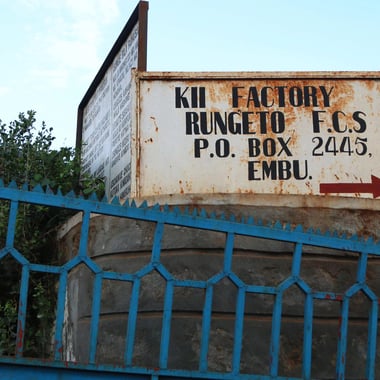
The Kainamui Coffee Factory is situated in the Ngariama region, in the Gichugu division of the Kirinyaga County. Established in 1963 near Mount Kenya, this cooperative has about 2000 smallholders, each owning and harvesting an average of only 200 coffee trees.

Recently, the Kainamui organisation (which is affiliated with New Ngariama FCS) has partnered with Coffee Management Services (CMS) to implement several processing systems, education protocols and incentives such as pre-financing loans. The goal is to offer higher economic stability for farmers alongside the tools to reach better harvest quality and, therefore, more profitable market dividends.
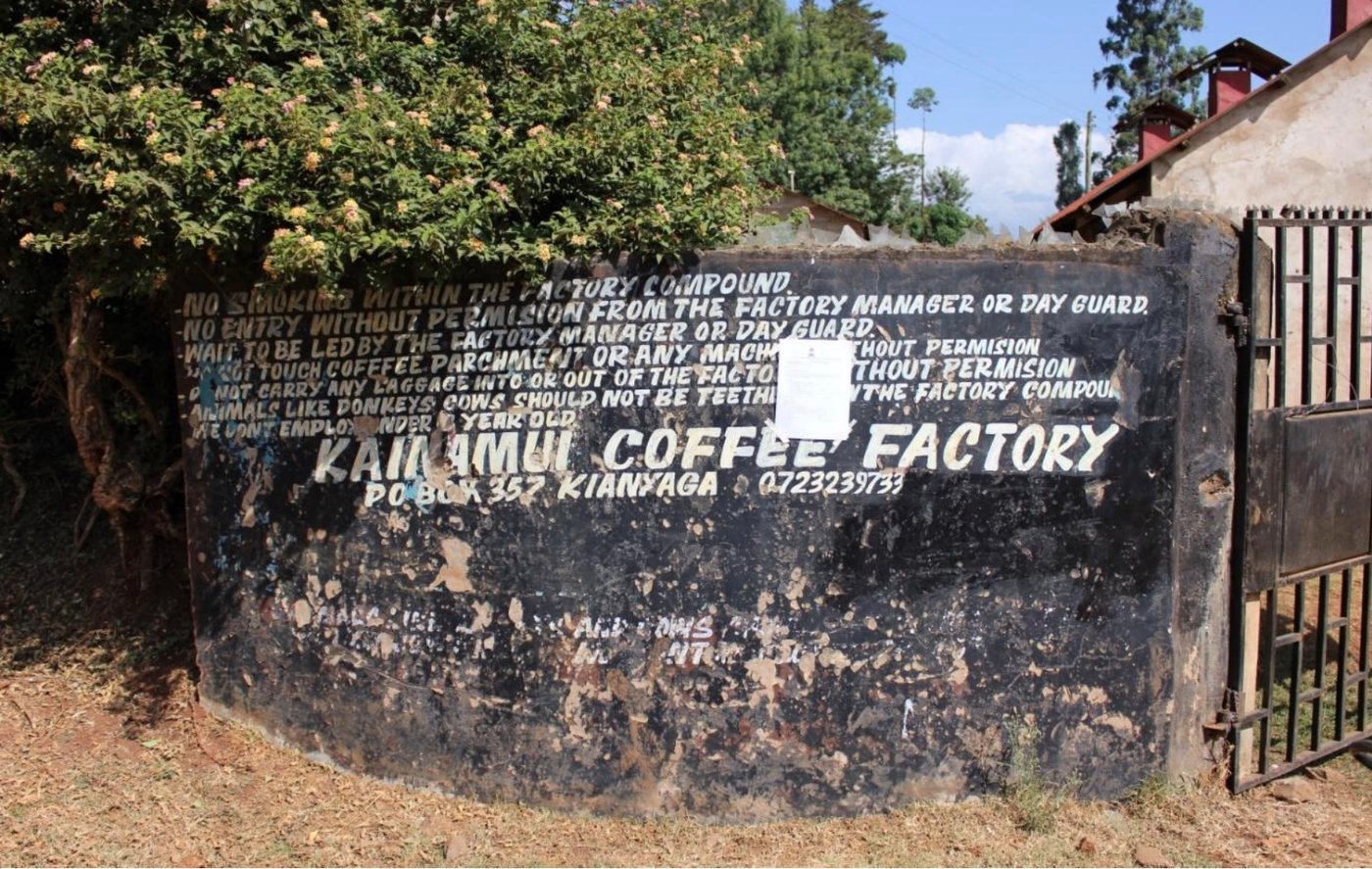
A word-based mural painted at the entry of the Kainamui Coffee Factory

Despite these efforts, the production volume has only dwindled almost every year. The reason? Amongst many others, less and less young population is interested in working with coffee. According to Trabocca, a European coffee importer that works a lot in Kenya, “most farmers within Kiringyaga and the surrounding counties age 50+ or even 60+ and have no successors. This is because most youths who grow up within coffee-growing families move on to more profitable markets, like taxi driving.”

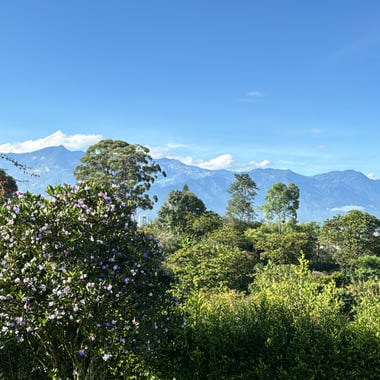
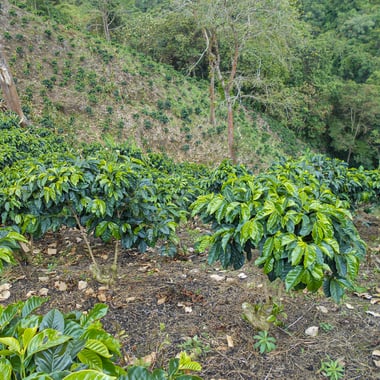
However, the quality is on the rise, and this coffee is an outstanding example of the potential of Kenyan coffee and particularly in Kirinyaga. The volcanic soil here is rich in minerals, which, combined with the high altitude (1,650 masl), voluminous rainfall (1800mm/year) and mild temperatures (16-26°C), create perfect conditions for growing cherries packed with deep flavours.

This lot is a traditional washed process that features the familiar Kenyan varieties SL 28, Batian and Ruiru 11.

First, the coffee is handpicked and delivered to the wet mill for pulping. Here, by the method of flotation, the immature mbuni’s (floaters) are separated from the dense, ripe cherries, which sink to the bottom of the container and are later sent to the fermentation tank.

Then, the cherries are left to ferment in water for about 24 hours, washed, and once again fermented again for 12-24 hours.

Later, the beans enter the washing channels where floaters are separated again and the mucilage is removed from the good beans. These enter the soaking tanks, sitting under clean water for another 24 hours, allowing amino acids and proteins in the cellular structure of each bean to develop, resulting in more acidity and complex fruit flavour—a quality that distinctively identifies Kenyan coffee.

Finally, the beans are laid on the initial drying tables, forming a thin layer and achieving a moisture level of ~50%; this first drying stage can last 6 hours. Afterwards, the beans are gathered and laid in thicker layers for 5-10 additional days, then bagged and left in dry storage until hitting the port.
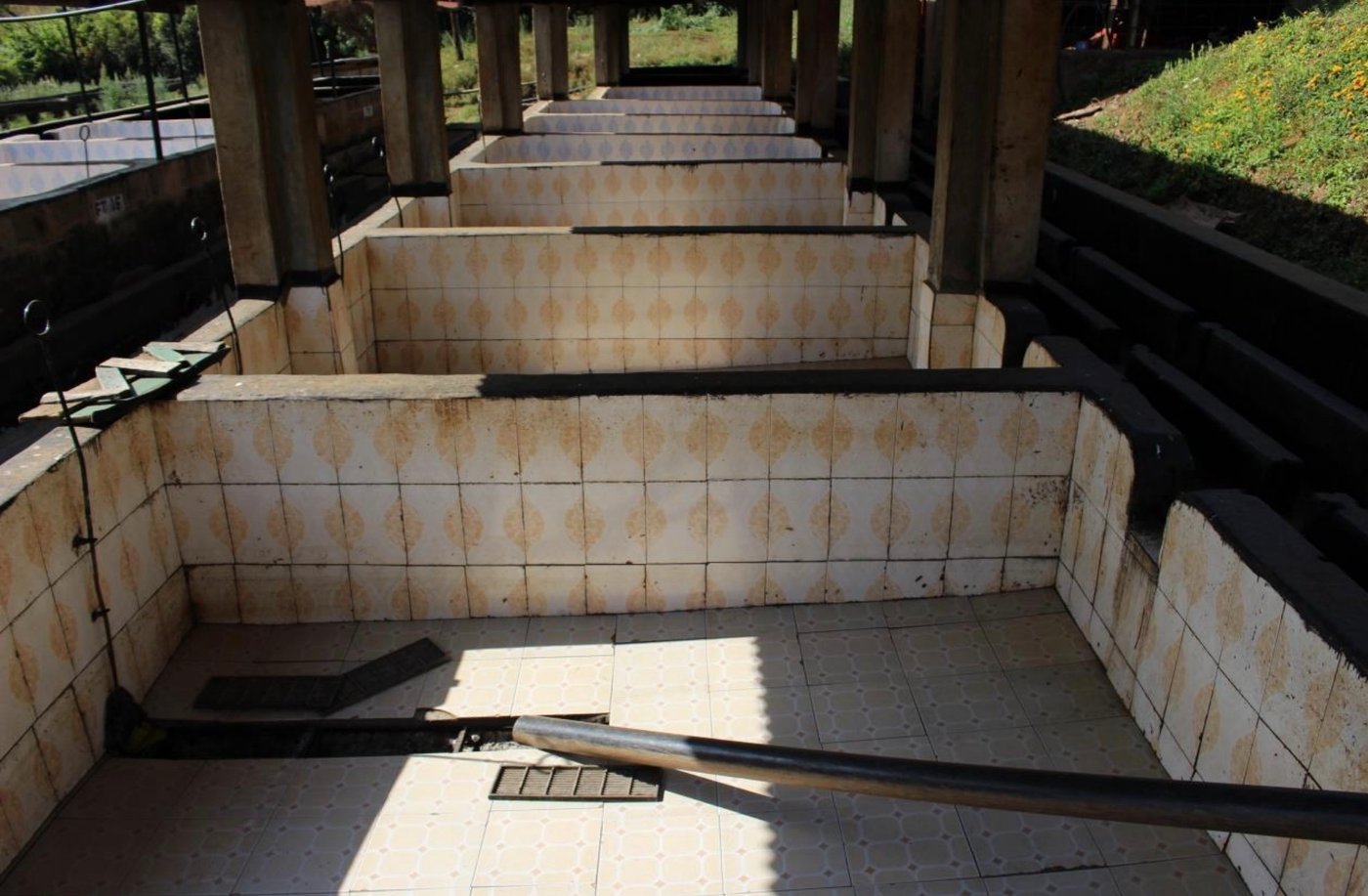
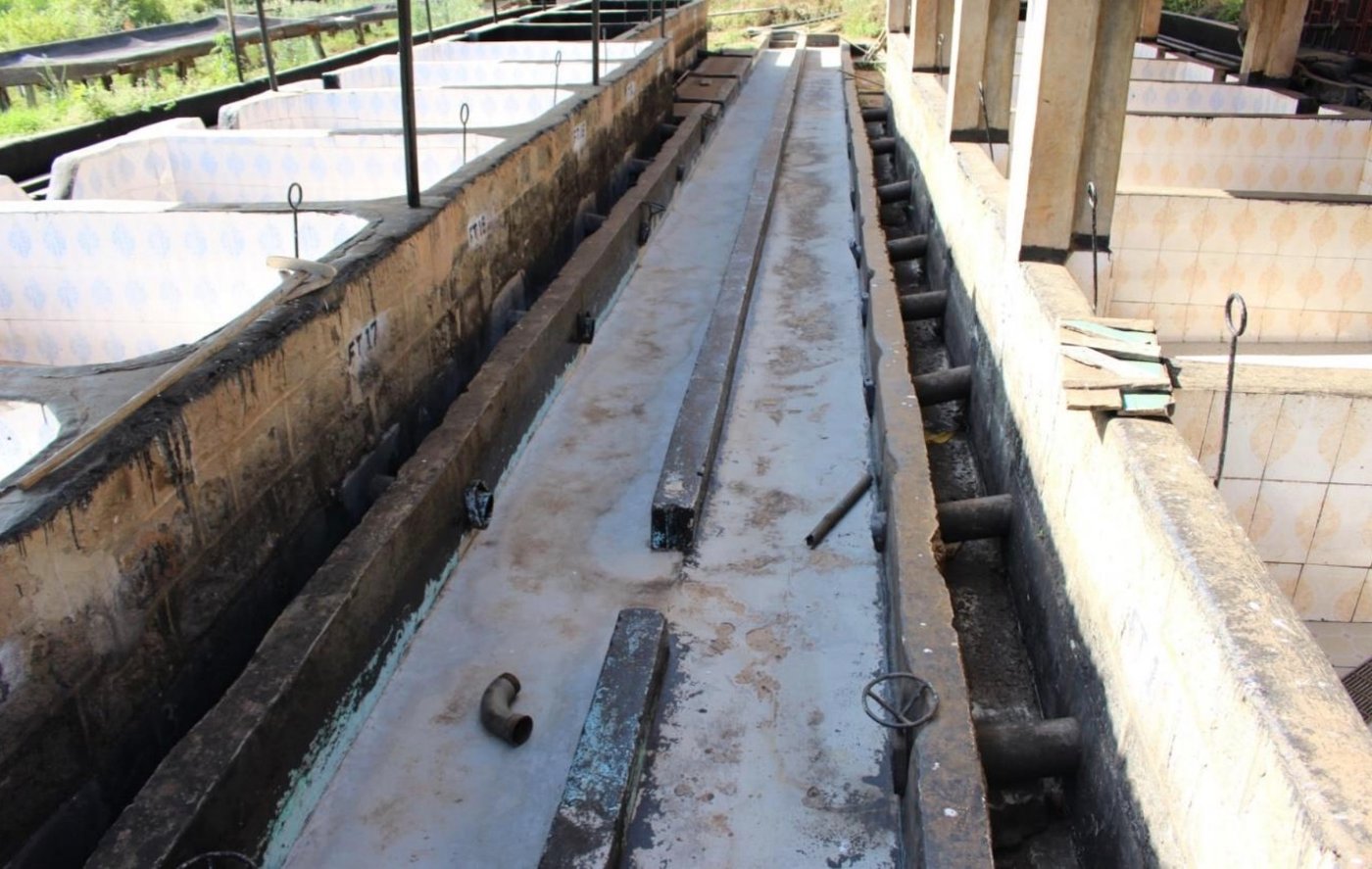
Fermenting facilities at the Kainamui Coffee Factory

Fermenting facilities at the Kainamui Coffee Factory

Summing up: a super nice Kenyan that shows everything about the status of coffee over there. Deep flavours and clean profile, which we must help preserve by paying higher prices so farmers keep their interest in growing this good while securing a fair living.


All images and information about this coffee and producers have been kindly shared by its importer, Condesa CoLab, and edited by us, Sample Coffee (unless linked to or credited otherwise).


Our new recommended brewing window for peak flavour is within days ~10-50 post-roast date.

We’ve recently changed into a Loring Kestrel S35 coffee roaster, which uses a different roasting technology from our previous one. Aside from reaching more nuanced and transparent flavours, we’ve noticed a change in our beans’ aging behaviour. Brewing between days ~10-50 post-roast seems to bring out the best of each coffee, but it may taste fine if you do it earlier or even a few days later. Test, try and adjust to find what works for you!

PS. Please note our packaging still shows our old recommendation. This will change in our next printed batch!


Need any brewing tips?

Head to our brew guides and find your favourite filter method—or head straight to our single origin espresso recipe. If you have further questions, send us an email. We’re always keen to help.

Traceability

100% SL28, Batian, and Ruiru 11 coffee beans, provided by Condesa Co.Lab and roasted by us on Gadigal land / Sydney.

Country grade: Unknown ?


This page has all the sourcing information (variety, process, region, story, importer, harvest date, and more) that our importers share with us for public use.

Being transparent helps us to talk confidently about the quality and background of the products we sell. It also helps you to know exactly what you’re buying.

Learn more:
Coffee page transparency legend
Our coffee philosophy
Our business approach

Fresh harvest sourcing

We only source and roast coffee from each country’s latest harvest season (so the green coffee is never older than 1 year from the time of picking, processing and packing).

This ensures the sensory qualities are always at their peak and unaffected by excessive ageing.

Learn everything about this coffee:


Roasted for espresso and filter (best enjoyed black)

Roast style: omni. Omni roasts are designed to brew and taste great both as espresso and filter. Our omni single origins generally sit on Agtron values in the ~70-60 value range. So, technically, they are somewhere in the lighter side of the medium spectrum.

Designed for espresso and filter brewing. Best enjoyed black.


Learn more:
Our Loring Kestrel S35 roaster
Our roasting style and approach

Try our custom brewing recipes

Our recipes and ratios are tailored to our coffee sourcing and roasting styles, bringing the best flavour and feel out of each coffee.

For pour over, immersion, and other filter brewing styles, check all our brew guides.

For our espresso single origins, we recommend a coffee:yield ratio of 1:3:

  • Dose: 20g ground coffee
  • Yield: 60g espresso
  • Total brew time: ~24-28 seconds

This is just a starting point! We encourage you to experiment, taste, and adjust to find the recipe that you enjoy the most.


Learn more:
Our espresso brew guide (single origin)
Brewing ratio calculator

Packaging and materials

  • Bags: ABA-certified home compostable (AS 5810-2010)
  • Labels: recyclable
  • Valves (only on +250g bags): general waste
  • Box and tape (online orders): recyclable

Learn more:
Our packaging

Brewing coffee at home

Best brewed 15–49 days post-roast

When you leave your whole beans to rest (inside the sealed bag) until our recommended window, you’re brewing at optimum flavour and acidity.

This time allows for the gas compounds, absorbed during the roasting process, to leave the coffee. If you brew too early, it may not be bad, but you’ll miss out on each coffee’s best flavour.

Our recommended brewing window

FAQs

Do you ship anywhere in Australia?

Yes! We deliver our coffee and brewing gear Australia-wide, roasted to order and in compostable and recyclable packaging.

Do you ship internationally?

We ship coffee beans to select international countries. Check the list to see if we ship to your destination.

Can I buy pre-ground coffee?

Yes, we offer pre-ground options for different methods:


- Ground for domestic espresso (home espresso machine)
- Ground for stovetop (Bialetti)
- Ground for AeroPress / Kalita / Cold Brew / Moccamaster / Plunger / French Press (immersion style)
- Ground for V60/Chemex (pour over style)

Do you source your coffee ethically? How so?

We source our coffee from small growers, producers, and cooperatives through responsible importing companies; 95% of our green coffee beans are supplied by Caravela Coffee, Cafe Imports, Osito, and Melbourne Coffee Merchants (certified B Corporations), plus Condesa Co Lab, Cofinet, and a few more.

We share all the traceability information we have about each coffee lot (territory of origin, producer, variety, processing method, importer, quality grade) on each dedicated coffee page. This applies to the blend components in our espresso blends.

Learn more about our coffee philosophy.

Do you roast dark or light?

We roast our single origins using omni roast medium/light profiles. (Omni means you can use the coffee both for filter and espresso brewing, no need to buy different bean bags with specific roast styles.)

We roast our espresso blends using darker profiles.

Learn more about our approach to roasting.

What is ‘specialty coffee’?

The definitions and references to specialty coffee are tricky, if not controversial.

Historically, and as most people see it these days, specialty coffee is Arabica beans that score over 80 in the old Specialty Coffee Association point scale. Today, the SCA refers to specialty coffee as “a coffee or coffee experience that is recognised for its distinctive attributes, resulting in a higher value within the marketplace.”

Our single origins are Arabica +85 SCA score and our blend components Arabica +80, which could be considered ‘true specialty’ coffee. Though we prefer to use the term ‘high quality’ and back this claim with solid traceability data.

What’s the benefit of your coffee subscription?

When you subscribe, you get freshly roasted coffee delivered as often as you need, so you don’t have to be so hands-on in planning your coffee purchases.

Also, you get free shipping on every delivery, and you can cancel or pause whenever you need – no lock-in periods.

Can I buy these beans in your coffee shops?

Yes, definitely! You can walk into any of our cafes in Sydney (or our wholesale network) and grab what’s available on the shelves. You can also buy online here and select free pickup from the Sample Coffee stores.


See all our FAQs

Sample Coffee Roasters warehouse in St Peters, Sydney

With love, from Sample

We’re an independent coffee roasting company based in Gadigal land / Sydney, Australia

We’ve been sharing exceptional coffees since 2011, with a particular focus on rotating single origins, ethical sourcing, and homebrewing accessibility.

Our daily work is driven by quality, consistency, transparency, and fun. This approach has slowly and organically connected us with a community of homebrewers and professionals who value how we do business and, above all, love delicious coffee beyond the hype.

Learn about us

Current coffees

All our current coffees